

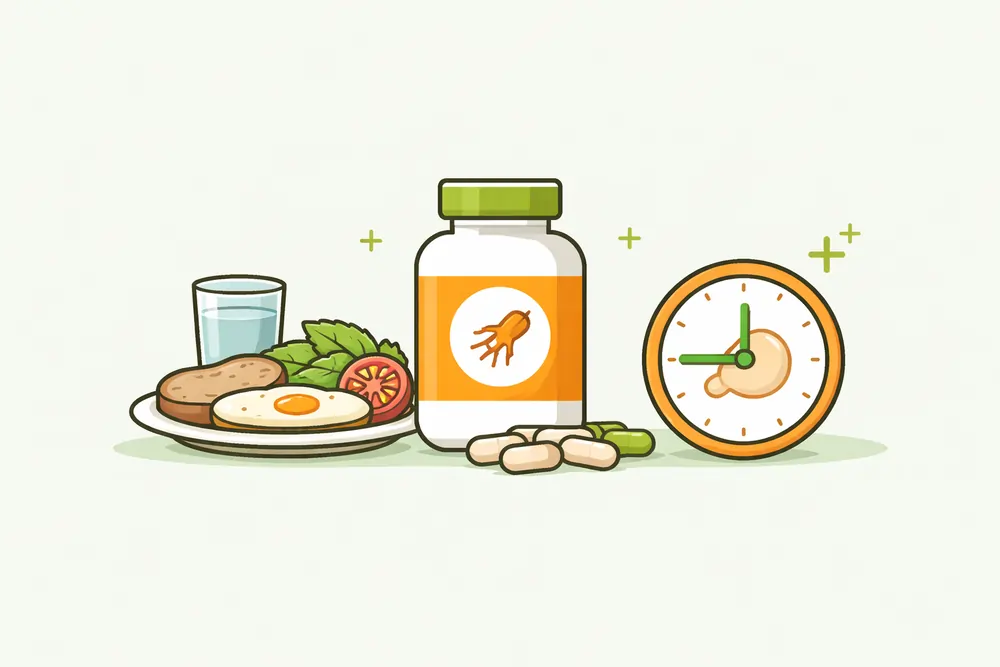
Stinging Nettle Root Capsules With Food or Empty Stomach is the kind of question people ask when they are ready to use a supplement but do not want to turn it into a daily guessing game. The good news is that this decision is usually practical, not complicated. If your product label says to take it with food, that direction should guide your routine first. From there, the goal is simple: make the schedule easy enough to repeat every day without confusion.
Many people do not struggle with the capsule itself. They struggle with timing. Breakfast is rushed. Lunch is inconsistent. Dinner changes from day to day. Then a missed dose happens, and the whole plan starts to feel messy. This article breaks the topic down into clear daily-life questions: morning or evening, food or no food, what to do if you forget, and how to stay consistent for a full routine period.
What is the short answer?
If the label says to take stinging nettle root capsules with food, follow that direction. In real life, that usually means taking the capsule with a meal you actually eat every day. For most beginners, the best schedule is not the most perfect one on paper. It is the one you can repeat with the least friction.
Taking a supplement with food can help some people fit it into a routine more comfortably. It also creates a built-in reminder because meals are easier to remember than empty-stomach windows. If your product gives a serving direction and a duration such as 30 days, consistency matters more than trying to invent a more complicated plan.
Why do some labels recommend taking capsules with food?
The main reason is routine support and user comfort. A meal gives the capsule a clear place in the day. It can also feel easier on the stomach for some people, especially if they are sensitive to supplements in general.
Food creates a stable anchor
When a label says “with food,” it simplifies the decision. You do not have to calculate a fasting window or wonder whether coffee counts as an empty stomach. You just pair the capsule with a regular meal.
Meals reduce timing confusion
A food-based schedule is easier to repeat on weekdays, weekends, travel days, and busy mornings. That matters because routine failure usually happens from decision fatigue, not from lack of interest.
Some people prefer a gentler routine
Not everyone likes taking supplements first thing in the morning with nothing else. A meal-based plan may feel more comfortable and more realistic, especially for beginners.
Does empty stomach ever make more sense?
It can make sense only if the product label allows it and you personally tolerate that approach well. But when the label specifically says “with food,” there is usually no strong reason to override it. In that case, empty stomach is not the better schedule. It is just the more inconvenient one.
For most shoppers, the real question is not “What is the most technical timing?” The better question is “What timing helps me follow the label correctly for the full routine?” That shift usually leads back to food-based use.
What daily schedule works best for most beginners?
The best schedule is usually the one attached to your most reliable meal. That meal does not need to be breakfast. It needs to be consistent.
| Meal option | Best for | Practical advantage |
| Breakfast | People with a stable morning routine | Easy to remember and done early |
| Lunch | People who skip breakfast but eat midday | Works well if lunch happens at a regular time |
| Dinner | People with unpredictable mornings | Often the most dependable full meal |
| Split with two meals | Products with divided servings | Keeps the plan tied to repeatable meal cues |
If your label says one capsule per day with food, many people do well by pairing it with breakfast or dinner. If your label calls for more than one daily serving, divide it across meals only if that matches the product instructions. Do not create a split schedule unless the label supports it.
Should you choose breakfast, lunch, or evening?
Choose the meal you miss the least. That is the clearest rule.
Breakfast works well when mornings are predictable
If you eat breakfast most days, morning can be the easiest option. It gets the dose done early and removes the mental load for the rest of the day. This works especially well if you already take other supplements with breakfast.
Lunch helps when mornings are rushed
Some people like the idea of morning supplements but never manage them. If that sounds familiar, lunch can be a better anchor. The best plan is the one that survives real life, not the one that looks disciplined in theory.
Dinner is often the most realistic choice
For many adults, dinner is the most regular full meal of the day. If breakfast is small and lunch is unpredictable, evening may be the easiest place to keep the habit steady.
What if the serving says twice a day?
If your specific product says to take the capsules twice a day with food, the cleanest routine is usually to pair them with two meals you reliably eat. For example, breakfast and dinner often work better than breakfast and lunch for people with busy workdays.
| Twice-daily pattern | Who it suits | Why it works |
| Breakfast + dinner | Most adults with a standard home routine | Simple spacing and strong meal cues |
| Lunch + dinner | People who skip breakfast | Avoids forcing an unrealistic morning habit |
| Breakfast + lunch | Early eaters with regular work breaks | Keeps evening free from extra reminders |
The pattern does not need to be perfect down to the minute. It needs to be clear enough that you do not forget whether you already took it.
What should you do if you miss a dose?
Do not panic and do not improvise a catch-up routine that the label does not support. In many everyday supplement routines, the practical move is to take the next scheduled dose as directed rather than stacking extra capsules. If the label provides specific missed-dose guidance, follow that. If it does not, stay with the normal schedule instead of turning one missed day into an overcorrected one.
A missed dose matters less than a broken routine. The bigger goal is to get back to the normal plan right away.
How do you stay consistent for 30 days?
Consistency usually comes from system design, not motivation. If the product suggests taking it for 30 days, build a schedule that removes small decisions.
Use the same meal every day
Do not rotate between breakfast, lunch, and dinner unless your schedule forces it. One stable meal cue is easier to remember than three possible options.
Store the bottle where the meal happens
Keep it in a safe, dry place near a routine you already have, such as where you prepare breakfast or where you keep your evening water glass. This reduces the chance of remembering the supplement after the meal is already over.
Pair it with an existing habit
Good pairings include breakfast prep, setting the table, or cleaning up after dinner. Habit stacking works better than relying on memory alone.
Track your use simply
A basic pill organizer or a one-line daily note is enough. You do not need a complex app unless you already like digital tracking.
What routine mistakes cause the most confusion?
Most problems are not about the supplement itself. They come from unclear habits.
- Changing the meal every day.
- Taking it only when you remember, without a fixed cue.
- Ignoring the food direction on the label.
- Taking one serving late, then trying to double up.
- Keeping the bottle out of sight and out of routine.
- Assuming weekends can follow a totally different plan.
A simple routine beats a clever routine. That is especially true for beginners.
Quick checklist for choosing food or empty stomach timing
- Read the Suggested Use section first.
- If the label says “with food,” use a meal-based schedule.
- Choose the meal you skip the least.
- Use the same meal daily when possible.
- Do not create a fasting rule unless the label requires it.
- Do not double up after a missed dose unless the label says to.
- Use a basic reminder tool if your schedule is busy.
- Review supplement use with a clinician if you are pregnant, breastfeeding, taking medications, or managing a health condition.
Are there any safety points to keep in mind?
Yes. Stinging nettle root capsules are dietary supplements, and supplements are not risk-free just because they are plant-based. Labels matter. Context matters. So do potential interactions.
Follow the label before outside advice
If your product says to take it with food, that instruction should take priority over random forum comments or generic timing advice.
Watch for personal tolerance
If a meal-based schedule feels better and helps you stay consistent, that is usually a practical win. If you notice discomfort or questions about use, pause and review the product directions or speak with a qualified clinician.
Be extra careful with medications and special situations
If you take prescription drugs, are pregnant, breastfeeding, or have an upcoming procedure, get individualized advice before adding a new supplement routine.
What is the best beginner-friendly routine in one sentence?
Take the capsule with the meal you eat most consistently, follow the label exactly, and keep the timing simple enough to repeat for the full schedule period.
FAQ
Should stinging nettle root capsules be taken with food?
If the product label says with food, yes. That is the best starting point.
Can I take stinging nettle root capsules on an empty stomach?
Only if the product directions allow it and you tolerate that approach well. If the label says with food, follow the label.
Is breakfast the best time to take stinging nettle root capsules?
Only if breakfast is your most consistent meal. Dinner may work better for some people.
What if I skip breakfast every day?
Use lunch or dinner instead. The best meal is the one you actually eat.
What should I do if I forget a dose?
Return to the normal schedule unless the product gives specific missed-dose instructions.
Do I need to take it at the exact same time every day?
No exact minute is usually needed. A consistent meal cue is often enough.
Is it better to take capsules in the morning or evening?
Neither is universally better. The better choice is the meal timing you can repeat reliably.
Why do labels often mention 30 days?
That kind of direction helps frame a consistent routine period and encourages regular use as labeled.
Glossary
Suggested Use
The label section that explains how much to take and when to take it.
With food
Taking a supplement alongside a meal or substantial snack, based on the product directions.
Empty stomach
Taking a supplement without food, usually outside a meal window.
Serving size
The amount the label defines as one serving, which may be one capsule or more.
Daily schedule
The repeatable timing pattern you use each day for a supplement.
Missed dose
A scheduled serving that was forgotten or skipped.
Consistency
Using the same supplement in the same general pattern over time.
Meal cue
A regular eating event, such as breakfast or dinner, used as a reminder point.
Supplement Facts
The label panel that lists serving size, ingredients, and amounts.
Routine friction
Small practical obstacles that make a habit harder to follow every day.
Conclusion
For most beginners, stinging nettle root capsules fit best with food when the label says so. Pick your most reliable meal, keep the routine simple, and let consistency do the work.
Sources
Product suggested use and caution details for stinging nettle root capsules, Secrets Shop product page — secrets.shop/products/stinging-nettle-root-capsules
General consumer guidance on dietary supplements and label-based use, Questions and Answers on Dietary Supplements — fda.gov/food/information-consumers-using-dietary-supplements/questions-and-answers-dietary-supplements
Dietary supplement labeling framework and label-reading guidance, Dietary Supplement Labeling Guide — fda.gov/food/dietary-supplements-guidance-documents-regulatory-information/dietary-supplement-labeling-guide
General information on dietary supplements and safety, MedlinePlus Dietary Supplements — medlineplus.gov/dietarysupplements.html
Consumer guidance on herb and supplement interactions, MedlinePlus Herbs and Supplements — medlineplus.gov/druginfo/herb_All.html
Clinical overview noting possible mild stomach discomfort with stinging nettle, NCCIH provider digest on benign prostatic hyperplasia and complementary approaches — nccih.nih.gov/health/providers/digest/benign-prostatic-hyperplasia-and-complementary-and-integrative-approaches-science
